
Hummingbirds vs. GPS: A Lesson in Navigation
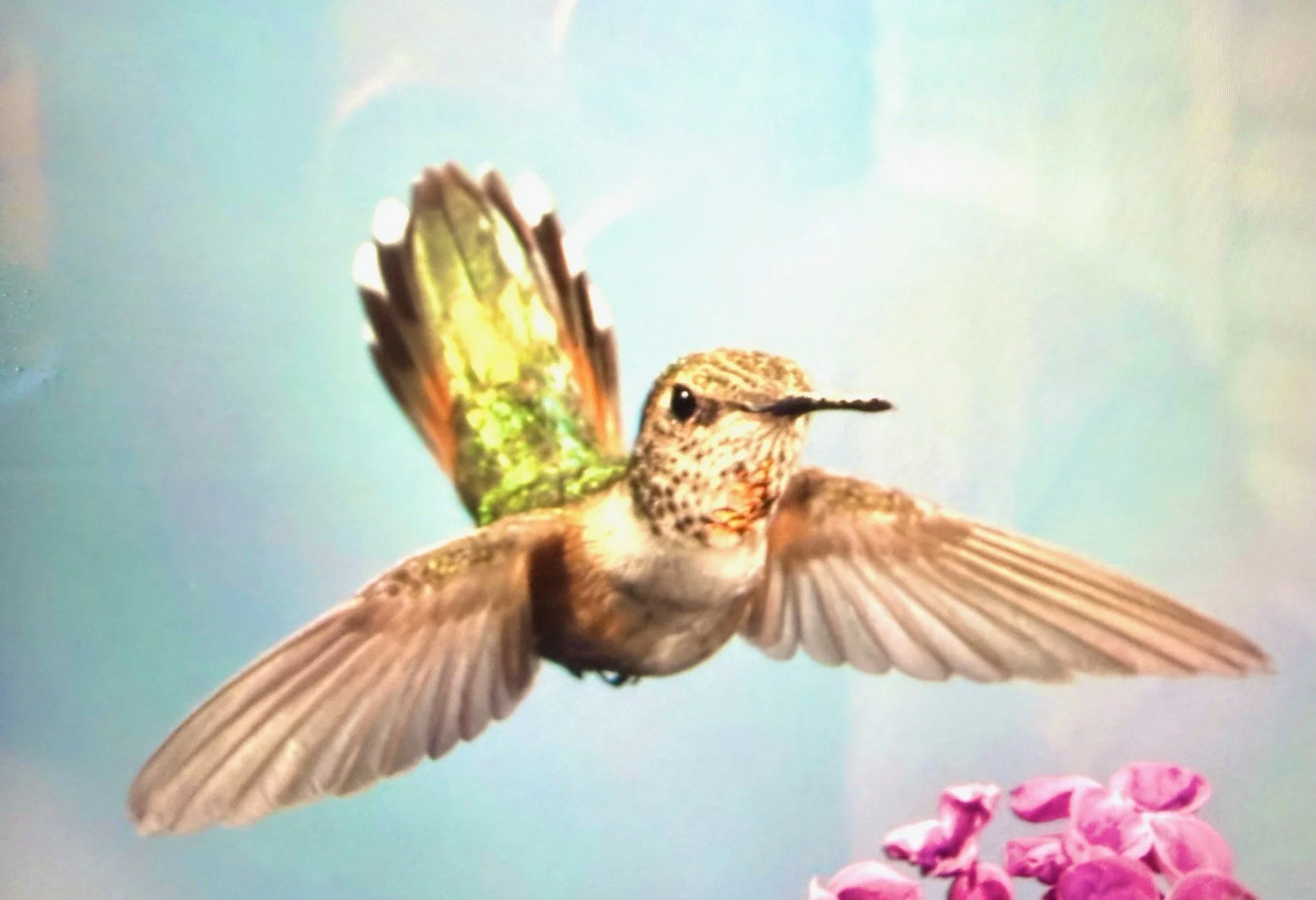
Hummingbird vs. GPS
Every spring, hummingbirds embark on one of nature's most remarkable journeys, traveling thousands of miles from Mexico to the lush landscapes of British Columbia. These tiny avian adventurers possess an internal navigation system so precise that even our most sophisticated technology seems primitive by comparison.
Meanwhile, I decided to make part of a similar journey from Montana, armed with my trusty car GPS and an abundance of confidence.
As I drove north beneath wide western skies, hummingbirds flitted effortlessly overhead, darting through the air with the precision of seasoned travelers. Their route seemed etched into the very fabric of nature, guided by instincts refined over countless migrations.
My GPS, however, had other ideas.
The trip began smoothly enough, but deep in the mountains my electronic guide started losing its grip on reality.
"Turn left at the next pine tree," it seemed to suggest—as though forests came equipped with neatly labeled intersections.
Meanwhile, the hummingbirds zipped by overhead, likely shaking their tiny heads at my predicament.
With road signs becoming increasingly scarce, I soon found myself navigating a maze of winding mountain roads. "Recalculating," my GPS chirped with what sounded suspiciously like digital panic.
I could almost hear the hummingbirds laughing.
Their wings blurred in the sunlight as they sailed effortlessly above valleys and ridgelines, while I searched desperately for a signal bar.
Eventually, I pulled over and consulted my phone, which proved to be as lost as I was. The screen displayed nothing more than a blank map and the dreaded spinning wheel of doom.
At that moment, I remembered the neglected road atlas buried beneath a pile of snack wrappers.
There, spread across paper pages filled with colorful lines and reassuring certainty, was my route. As I traced the roads with my finger, the hummingbirds continued their journey overhead, utterly unfazed by mountains, valleys, or the absence of cellular service.
Eventually, I reached British Columbia—a little wiser and considerably more humbled. The hummingbirds had undoubtedly arrived long before me, settling gracefully into their seasonal home without ever needing to "recalculate."
The lesson?
Technology is wonderful—until it isn't. In the mountains, where signals fade and roads twist unexpectedly, a trusty paper map still has its place.
And perhaps the hummingbirds have been quietly reminding us all along that sometimes the best navigation system is the one nature provides.